Average Cost of Professional Tree Removal: 2026 Pricing Guide
Table of Contents
- What Homeowners Pay for Professional Tree Removal
- Tree Removal Cost by Size: Small, Medium, Large, and Extra-Large Trees
- Key Factors That Determine Your Tree Removal Estimate
- What's Included in Your Quote: Stump Removal, Debris Cleanup, and Disposal
- Tree Removal Insurance Coverage: What Your Policy May Pay
- How Long Does Professional Tree Removal Take?
- Permits, Protected Trees, and Local Regulations You Need to Know
- How to Get a Fair Estimate and Verify Your Contractor
- Frequently Asked Questions
Last Updated: October 11, 2026
What Homeowners Pay for Professional Tree Removal
When you call a tree removal company for a quote, the first question is always the same: what is the average cost of professional tree removal? The answer depends on dozens of variables, but homeowners typically find that professional tree removal ranges widely based on tree size, location, and complexity. At Pickard's Lawncare LLC, we've helped hundreds of property owners understand what goes into a fair estimate and why two quotes for the same tree can differ significantly.
The average cost of professional tree removal varies because every job is unique. A small tree in an open yard costs far less than a large tree near your house or power lines. Understanding the factors that drive pricing helps you evaluate quotes and avoid overpaying for unnecessary services, or worse, underpaying and hiring an unqualified contractor.
This guide breaks down the true cost structure of tree removal, what's actually included in your quote, and how to verify you're getting a fair price from a qualified professional.
Tree Removal Cost by Size: Small, Medium, Large, and Extra-Large Trees
Tree size is the single biggest driver of removal cost. Larger trees require more labor, specialized equipment, and time to remove safely.
Small trees (under 30 feet tall) are the most affordable to remove. These typically include young trees, smaller species like dogwoods or ornamental maples, and trees with simple access.
Medium trees (30 to 60 feet tall) represent the majority of residential removals. These include mature oaks, maples, pines, and other common hardwoods. Medium-sized trees require careful planning to avoid damage to nearby structures.
Large trees (60 to 80 feet tall) demand specialized equipment and experienced crews. These are often mature oaks, pines, or other forest-type species. Removal typically requires a bucket truck or climbing rigging to safely lower sections.
Extra-large trees (over 80 feet) are the most expensive removals. These ancient oaks, pines, and other hardwoods may require a crane, multiple days of work, and specialized disposal.
Key Factors That Determine Your Tree Removal Estimate
Beyond size, several critical factors shape what you'll actually pay for tree removal. Understanding these helps you anticipate costs and spot unrealistic quotes.
Tree species and wood characteristics
Different tree species vary in density, branch strength, and how they respond to cutting. Hardwoods like oak and hickory are denser and heavier than softwoods like pine or spruce. A large oak weighs far more than a large pine of the same height, which increases labor and hauling costs. Some species have brittle wood that breaks unpredictably during cutting, requiring slower, more careful work. Others have dense branch structures that take longer to chip or cut into manageable pieces. Professional arborists factor in these characteristics when estimating labor time.
Tree condition and health
A dead tree removes differently than a living one. Dead wood becomes brittle and unpredictable, branches may snap without warning, and the trunk can fail during cutting. This requires extra caution and often increases labor time. A diseased tree with weak wood or hollow sections presents similar hazards. Conversely, a healthy tree with strong, flexible wood is often faster to remove safely. Storm damage complicates removal significantly: broken limbs hang precariously, the trunk may be split or leaning, and the tree's structural integrity is compromised. Emergency removal of storm-damaged trees typically costs more because the work is riskier and more urgent.
Location and accessibility
A tree in an open yard is simple to remove, the crew has room to work, debris can be stacked and chipped on-site, and equipment can be positioned easily. A tree near your house, garage, or fence dramatically increases complexity and cost. The crew must work more carefully to avoid damage, use rigging to lower limbs instead of dropping them, and may need to remove sections piece-by-piece rather than felling the entire tree. Trees near power lines require coordination with the utility company and often demand a specialized crew certified to work near electrical hazards. Narrow side yards, steep slopes, and poor access for equipment all push costs higher. If the crew can't drive a chip truck close to the work area, they'll spend more time hauling debris by hand.
Hazardous removals and specialized equipment
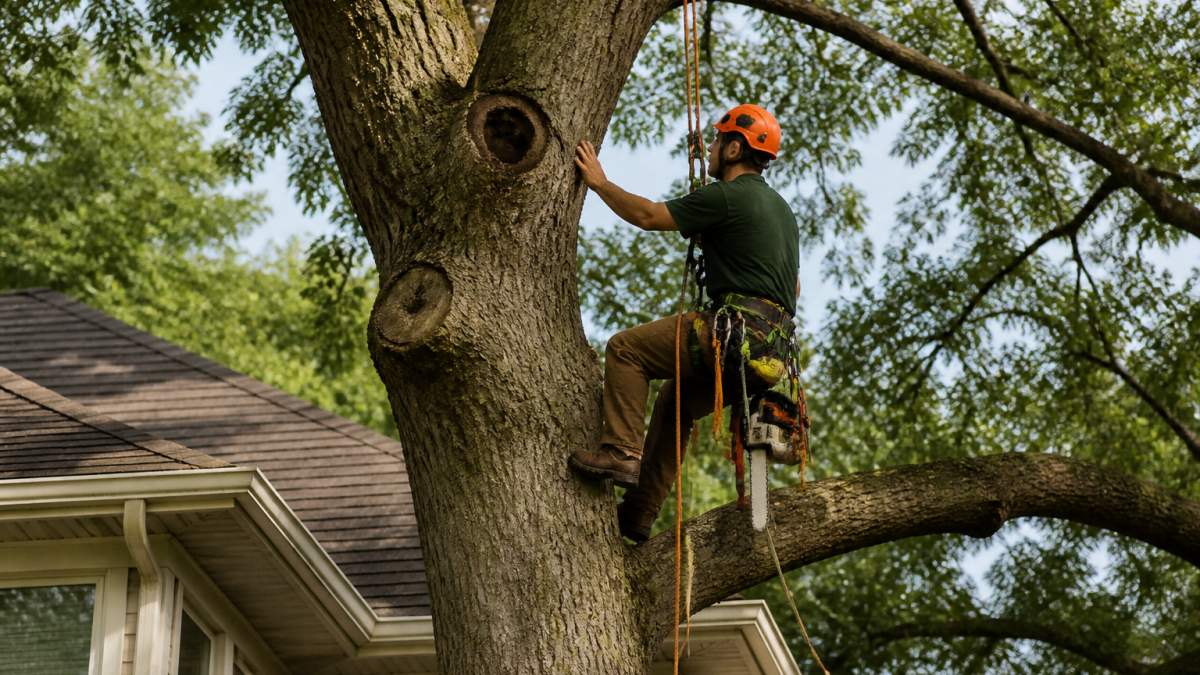
Some removals are inherently dangerous and require specialized techniques. A tree leaning toward your house needs careful rigging to prevent it from falling the wrong way. A tree with multiple large limbs hanging over a roof must be climbed and dismantled piece-by-piece. A tree growing through a fence or intertwined with utility lines demands expertise and often coordination with external parties. These hazardous removals take longer, require more experienced crews, and may necessitate equipment like bucket trucks or cranes. Crane removal is the most expensive option but is sometimes the only safe way to remove a large tree in a confined space. A crane operator, the crane rental itself, and the specialized rigging all add significant cost, but they prevent catastrophic damage and injuries.
What's Included in Your Quote: Stump Removal, Debris Cleanup, and Disposal
A professional tree removal quote should itemize what's included. This is where many homeowners get confused, some quotes seem cheap until you realize they don't include stump removal or debris hauling.
Tree cutting and limb removal is the core service. The crew fells the tree (or removes it in sections), cuts branches into manageable pieces, and prepares everything for removal or chipping.
Stump removal is often a separate line item. Stump grinding grinds the stump below ground level, leaving wood chips. Stump removal pulls the entire stump and root system out of the ground, which is more invasive but eliminates the stump completely. Some quotes include grinding; others charge extra.
Debris cleanup and hauling is critical. Does the quote include chipping branches on-site, or will the crew haul everything away? On-site chipping leaves you with a pile of mulch; hauling removes all debris.
Site cleanup should be included. A professional crew should remove all small debris, rake the area, and leave your yard in better condition than when they started. Some contractors charge extra for this; others include it. Verify what "cleanup" means in your quote.
| Service Component | Typically Included | Sometimes Extra | Notes |
|---|---|---|---|
| Tree cutting and removal | Yes | , | Core service; varies by tree size |
| Limb chipping | Yes | Sometimes | On-site chipping vs. hauling away |
| Stump grinding | Sometimes | Often | Separate from tree removal cost |
| Debris hauling | Sometimes | Often | Disposal fees may apply |
| Site cleanup and raking | Usually | Sometimes | Clarify what "cleanup" includes |
| Firewood stacking | Rarely | Usually | Only if you want firewood |
Tree Removal Insurance Coverage: What Your Policy May Pay
Many homeowners assume their homeowner's insurance covers tree removal. The reality is more complicated. Most standard policies cover tree removal only if the tree falls and damages your home, garage, deck, or other insured structure (If a tree falls on your house, are you covered?).
If a tree falls during a storm and damages your roof, fence, or vehicle, your insurance may cover removal of the fallen tree as part of the damage claim. However, coverage varies by policy and insurer. Some policies have limits on tree removal costs, and you may be responsible for a deductible.
For proactive removal of a hazardous tree, one that's dead, diseased, or leaning dangerously, you'll pay out of pocket. This is why getting a fair estimate is important. Some homeowners put off removal because they underestimate the cost, then face an expensive emergency removal when the tree finally fails.
Contact your insurance agent to understand your specific coverage before a problem arises. Ask whether removal of a fallen tree is covered, whether there's a cost limit, and what documentation the insurer requires.
How Long Does Professional Tree Removal Take?
The time required for tree removal varies dramatically based on tree size, complexity, and crew size. A small tree in an open yard might take 2 to 4 hours. A medium tree typically requires 4 to 8 hours. A large tree can take a full day or multiple days, especially if rigging or crane work is involved.
Several factors affect timeline. A tree with clear access and simple structure removes faster. A tree near structures, power lines, or in a confined space takes much longer because the crew must work carefully and coordinate with external parties. Weather also matters, rain, wind, or extreme heat can slow work or force postponement.
Most professional crews can complete a standard residential tree removal in a single day. However, if stump grinding, debris hauling, or site restoration is included, the job might extend into a second day. Emergency removals of storm-damaged trees may take longer if the crew must coordinate with utility companies or if the tree's condition makes the work more hazardous.
Permits, Protected Trees, and Local Regulations You Need to Know
Before removing a tree, check whether your local government requires a permit. Many municipalities require permits for tree removal, especially for trees above a certain diameter or in protected areas. Some jurisdictions protect certain species or require replacement trees if you remove one. Fines for removing a protected tree without permission can be substantial.
A qualified contractor should be familiar with local regulations and can advise you on permit requirements. Some contractors will handle the permit application for you; others will tell you to obtain it yourself. Never skip this step, removing a protected tree without permission can result in fines and legal complications.
Additionally, some neighborhoods have covenants or homeowner association rules that restrict tree removal. Check your property deed or HOA guidelines before proceeding. If you're unsure, contact your local building department or planning office. They can tell you whether a permit is required and whether the tree is protected.
How to Get a Fair Estimate and Verify Your Contractor
Getting multiple quotes is essential. Call at least three reputable tree removal companies and ask for written estimates. A professional estimate should specify the tree size, species (if known), what's included in the removal, stump removal options, debris disposal, and the total cost.
When evaluating contractors, verify their credentials. Ask whether they're insured (both liability and workers' compensation) and licensed if your state requires it. Request references from recent jobs and follow up with them. Ask whether they've worked on similar trees or in similar situations.
Avoid the cheapest quote automatically. If one estimate is significantly lower than others, ask why.
Verify that the contractor carries liability insurance. If something goes wrong, a branch falls on your neighbor's car, or the crew damages your fence, insurance protects you. Ask for proof of insurance before work begins.
Professional tree removal is a significant investment, but it's one of the most important decisions you'll make for your property's safety and appearance. Understanding the cost factors, what's included in your quote, and how to verify your contractor helps you make an informed choice.
Frequently Asked Questions
How much does professional tree removal usually cost?
The final cost depends on tree size, species, location, accessibility, and whether removal includes stump grinding and debris cleanup. Requesting free estimates from multiple arborists helps you understand pricing in your area and what each quote includes.
What factors affect the cost of removing a tree?
Tree height, diameter, species, condition, and location are primary cost drivers. Hardwood species cost more to remove than softwoods. Trees near power lines, houses, or in tight spaces require specialized equipment and careful labor, increasing costs. Dead or diseased trees may be cheaper to remove but riskier. Accessibility, whether the crew can reach the tree easily, also significantly impacts labor time and equipment needs.
Will homeowners insurance pay to have a tree removed?
Homeowners insurance typically covers tree removal only if the tree fell due to a covered event like a storm or lightning strike and caused damage to your home or structures. Removal of a healthy, standing tree is generally not covered. Review your policy details and contact your insurer after storm damage to understand what they'll reimburse. Emergency removal after severe weather may have different coverage terms than routine removal.
How long does professional tree removal take?
The time required for tree removal varies depending on size, complexity, and whether stump grinding is included. Hazardous removals near power lines or structures take longer due to safety precautions. The crew size, equipment needed, and debris cleanup time all affect the total duration. Your arborist can estimate the timeline during the consultation.
More From Our Blog
- How to Maintain Healthy Lawn Grass: 2026 Guide
- Lawn Care Services in North Carolina: A Complete Guide
- All articles
Call 336-432-0023 or request a free quote.